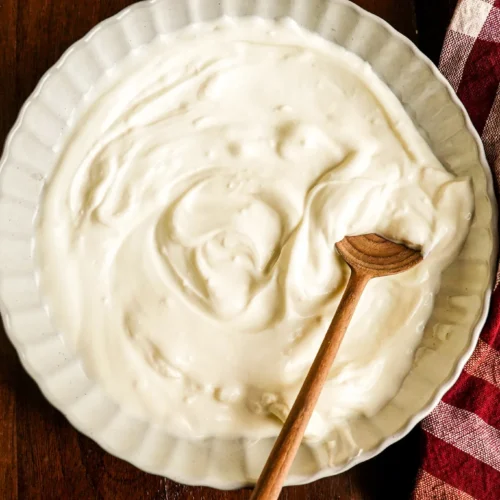
2 Ingredient Homemade Yogurt
Easy, 2 ingredient homemade yogurt perfect for all Middle Eastern yogurt stews, and perfect as a side to all rice dishes!
Ingredients
- 1 gallon whole milk
- ⅓ cup store-bought yogurt with active cultures
Instructions
Heat The Milk
- Pour the milk into a saucepan and heat it slowly over medium heat until it reaches 180°F (82°C). This helps kill any undesirable bacteria and denatures the milk proteins, which makes for a thicker yogurt. If you’re not using a thermometer, you just need to stir and keep an eye on the milk as it sits on the stove. Once it starts boiling, remove it and set it aside
- *Keep stirring occasionally to prevent a skin from forming.
Cool the Milk
- After the milk reaches 180°F, remove it from heat and let it cool to 110°F (43°C). This is the best temperature for the yogurt cultures to work and thrive. If you’re not using a thermometer, use a clean finger and dip it into the pot, making sure to get it in the middle of the pot. If you can count to 10 without removing your finger, then it’s good to go.
Add the Yogurt Starter
- Once the milk has cooled to 110°F, mix in the store bought yogurt. I used about ⅓ cup of yogurt for the whole gallon of milk.
- Stir gently but thoroughly to ensure the starter is evenly distributed. Do not whisk.
Incubate the Yogurt
- Pour the mixture into clean jars or a clean pot with a lid. Wrap the containers or pot in a few towels or a large blanket. Now, keep the yogurt warm for 12 hours, and up to 24 hours for the yogurt to incubate.
- The longer the yogurt incubates, the more sour and tangy and thicker it will become. In Middle Eastern households, this is the desired outcome for yogurt.
Refrigerate the Yogurt
- Once the yogurt has incubated for 12+ hours, transfer to the fridge to completely cool, about 4-8 hours.
Notes
Thicker yogurt: For even thicker yogurt, strain the finished yogurt using a cheesecloth or fine-mesh strainer to remove excess whey.
To make Labaneh: Strain the yogurt with a cheesecloth for a day.
Tried this recipe?Let us know how it was!