
When the charming cuisine of Italy meets the greatness of Middle Eastern cuisine, culinary miracles happen! For the love of gluten! Who does not love freshly baked bread, especially if it is Focaccia? No one could resist. This Easy Zaatar and Sumac Focaccia, which needs no kneading, combines the best of both worlds.
This easy focaccia recipe yields a fluffy and soft bread with a cloud-like texture that does not require kneading. This particular recipe combines famous Middle Eastern flavors, as it is topped with aromatic zaatar, flavorful sumac, and glossy olive oil. If you are a baking newbie, this is the recipe you must try first.
Flavorful, Simple, and Irresistible
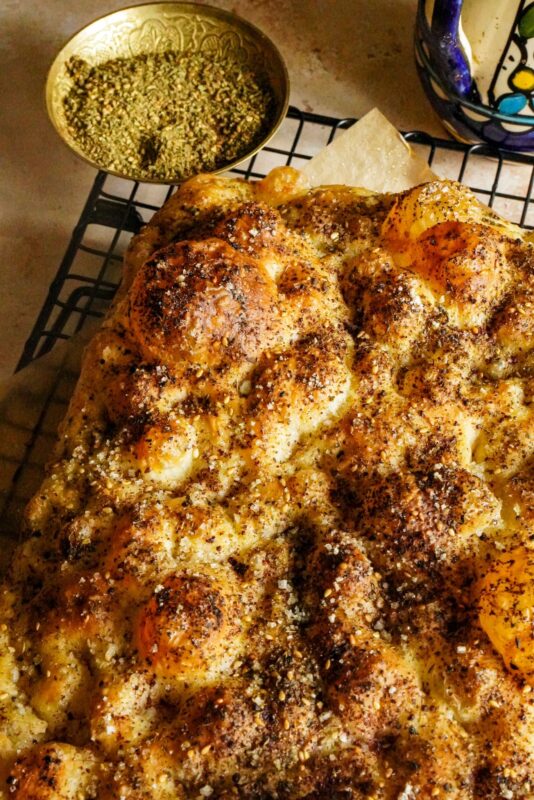
Why You’ll Love This Recipe
Bread-making can be a bit intimidating for some. However, I promise this Focaccia bread recipe will change your perspective, and you will end up falling in love with making this incredible recipe, due to the following reasons:
No Knead: That’s right Focaccia is a bread that requires zero kneading. This is because of the dough’s initially sticky and wet texture, making kneading pretty impossible.
Drenched with Olive Oil: What’s Focaccia without its olive oil? Crafting this easy Focaccia bread from scratch gives you the upper hand in adding the generous amount of olive oil your bread requires to achieve that crispy exterior. Olive oil will grant your crust the perfect golden color and irresistibly rich flavor.
Made with Simple Ingredients: Focaccia requires just a handful of pantry staples, nothing major. So, finding the right ingredients is a breeze. The Focaccia dough simply calls for flour, yeast, sugar, and olive oil!
Versatile: Focaccia is initially a chewy, pillowy bread that can be topped with garlic, tomatoes, and various herbs. This Zaatar and Sumac Focaccia recipe is adorned with both sumac and zaatar, elevating the flavor of the bread and transporting it to a Middle Eastern wonderland.
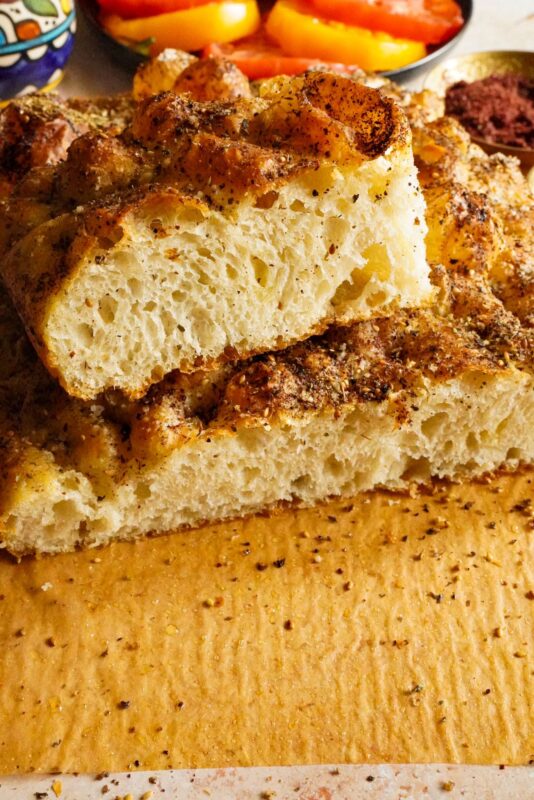
Incredibly Soft!
Ingredients
For the Dough
All purpose flour
Warm water
Active dry yeast
Olive oil
Salt
Sugar
For the Toppings
Extra virgin olive oil
Zaatar
Sumac
Salt
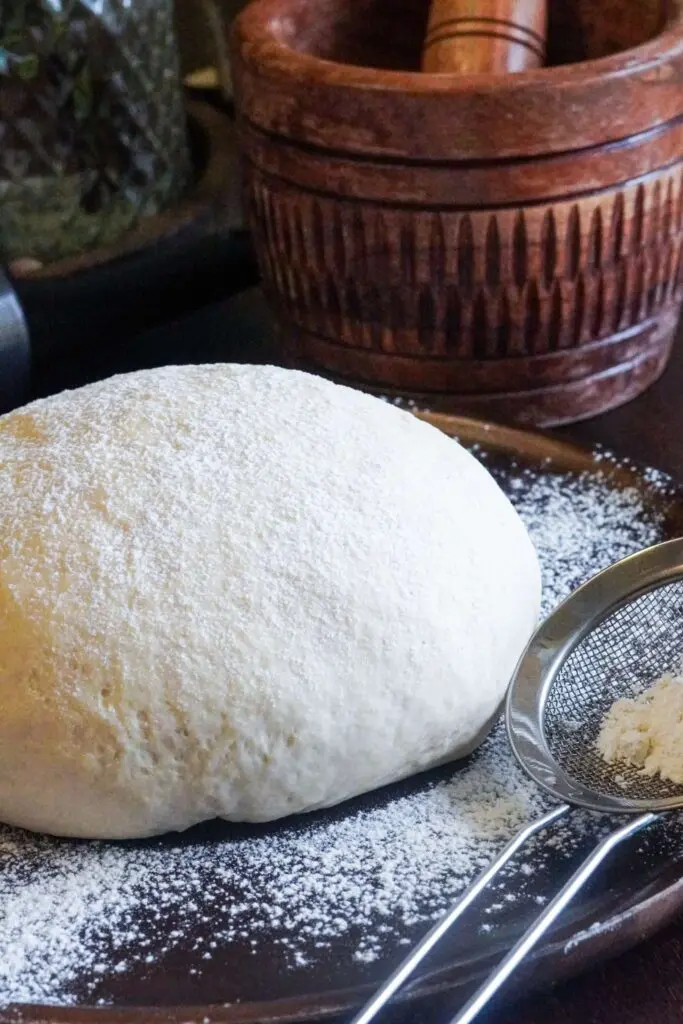
Pillowy Dough!
Steps to Prep
To Prepare the Dough
To start with, mix together the sugar, flour, and yeast. Add in the salt and olive oil, and mix again.
Second of all, pour in the two cups of warm water and mix well with a wooden spoon until the flour is well incorporated. It will be extremely sticky and wet.
Then, cover with plastic wrap and let it sit at room temperature for half an hour.
After half an hour is passed, grab the top part of the dough, and stretch it upwards lightly, then fold it towards the middle. Do the same for the right, bottom, and left side of the dough.
Next, cover and let it sit at room temperature for an hour. Once the hour is up, repeat the stretch and folds.
Now, cover again and let it sit at room temperature for another hour. Repeat the stretch and folds again so the gluten builds structure, making sure to do the stretch and folds each time.
Once the four stretch and folds are over, oil a bowl with two tablespoons extra virgin olive oil and transfer the dough.
Then, cover with plastic wrap and place in the fridge for 12-18 hours.
To Bake the Focaccia
First things first, remove the dough from the fridge and rest at room temperature for an hour.
Then, prepare a 9×13 pan with parchment paper and 1.5 tablespoons olive oil.
Once the dough is ready, add to the oiled pan.
Then, cover with plastic wrap and let it proof for two hours. The dough should reach the pan all along the edges, if not, lightly stretch it to fit.
After that, when it becomes close to finish proofing, preheat the oven to 400°F.
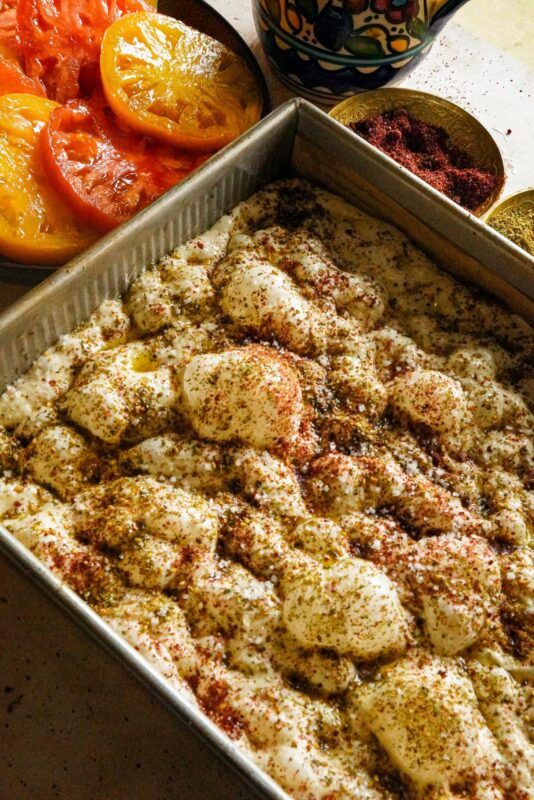
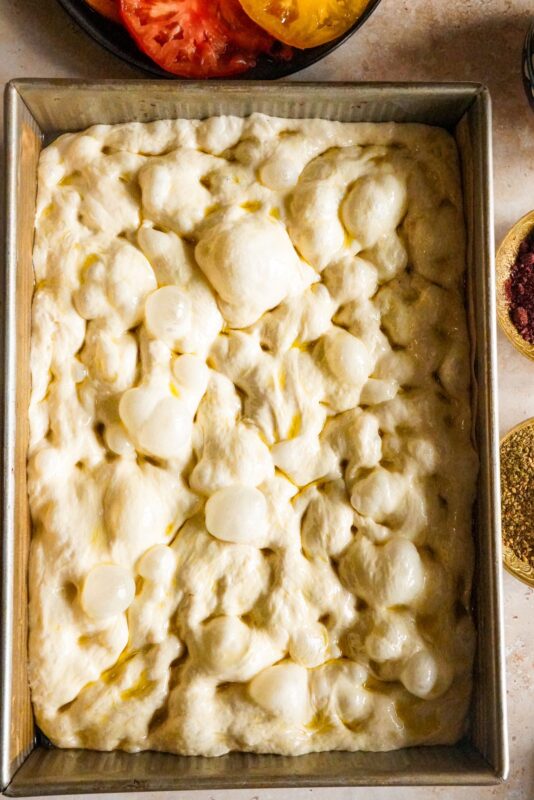
Once ready, drizzle two more tablespoons of olive oil onto the dough and dimple the dough with your fingers.
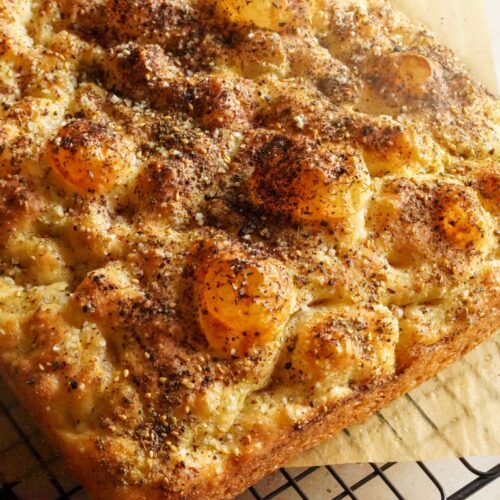
Then, sprinkle the sumac, salt, and zaatar and bake at 400°F for 20-30 minutes until the top is golden.
Finally, cool for at least 10-15 minutes before slicing.
Aromatic Focaccia
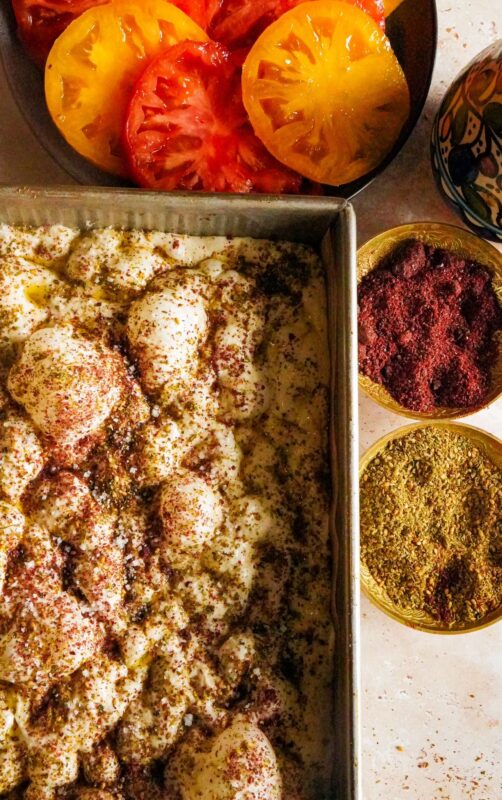
Focaccia Topping Variations
Focaccia is typically a flat bread so versatile that can be enjoyed with a variety of toppings. Both zaatar and sumac elevate focaccia and add a Middle Eastern aromatic hint to it! This twist is definitely worth a try. But, if you prefer more topping variations, here is a compilation of some:
Back to Classics: Garlic, rosemary, olive oil, and a pinch of salt create a fragrant combination of flavors.
Veggie Toppings: It is so common to add olives and tomatoes to Focaccia. Olives pair well with zaatar, and tomatoes complement fresh basil and garlic nicely.
For the Love of Herbs: You can pair thyme, basil, or even oregano with both olive oil and salt.
Top Tips
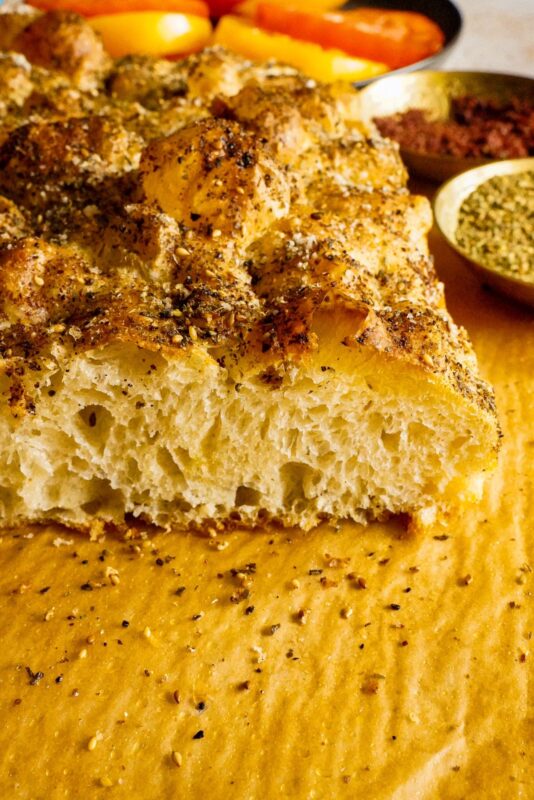
This easy Focaccia bread doesn’t require kneading, so the least you could do is follow the steps presented above, which emphasize the importance of giving the dough the amount of time it needs to proof nicely. If you do not do so, the soft and pillowy texture will definitely get affected.
Focaccia is famous for its chewy, soft interior and crispy edges. These characteristics are only achieved by the generous addition of olive oil.
Don’t skip the part where you dimple the surface of the dough. Dimpling simply means pressing with your fingertips on the dough’s surface. Dimpling not only adds visual appeal but also allows the olive oil to sit in them, creating an appetizing color during baking.
Make sure that you work with the dough gently and try not to pop the bubbles, as they contribute to an airy and fluffy texture.
No one resists the aroma of freshly baked bread in the house; however, you need to hold your horses and wait for at least 10 minutes before slicing it.
An Effortless, Dreamy Bread
Storage Tips
You can leave Focaccia bread at a room temperature for 2 days. However, it is important to either place it in an air-tight container or wrap it properly in a plastic wrap to maintain its freshness.
Also, it is not recommended to refrigerate focaccia as it can speed up the staling of the bread. However, freezing focaccia can be viable option if you want to extend its shelf life. Placing the bread in an air-tight container or wrapping it in plastic wrap can make it last for up to 2 months.
An Image You Can Smell!
Frequently Asked Questions (FAQs)
Olive oil for sure! Oiling the pan before baking is an essential step that helps achieve the desired golden crust, in addition to generously drizzling the dough with olive oil before baking.
Dimpling is considered a vital step that cannot be skipped, simply because it prevents the dough from rising up more than expected. Plus, it allows even distribution of the olive oil an other toppings. Besides, it gives the bread that aesthetic, irresistible visual appeal.
This easy focaccia recipe doesn’t call for kneading due to its sticky and wet dough. We all know that kneading enhances the development of gluten. However, this recipe develops gluten by simply letting the dough rise on its own, giving it the time it needs to develop its desired structure.
Absolutely! All of the dough’s ingredients are vegan friendly.
Must-Try Baked Goods Recipes
Honeycomb Bread (Khaliat Al Nahl)
Easy Blueberry Almond Ricotta Cake
Orange Cardamom Olive Oil Cake
If you’ve tried this recipe, don’t forget to rate it and leave a comment below! I would love to hear about your experience. You can follow me on Facebook, Instagram, and YouTube.
Easy Zaatar and Sumac Focaccia

Ingredients
For the Dough
- 4 cups all purpose flour
- 2 cups warm water
- 1 ¼ teaspoons active dry yeast
- 2 tablespoons olive oil (more extra virgin olive oil for tray and bread prep)
- 2 teaspoons salt
- ½ tablespoon sugar
For the Toppings
- 2 tablespoons extra virgin olive oil
- 2 tablespoons zaatar (more to taste)
- 1 tablespoon sumac (more to taste)
- salt to taste
Instructions
To Prepare the Dough
- Mix together the sugar, flour, and yeast. Add in the salt and olive oil and mix again.
- Pour in the 2 cups of warm water and mix well with a wooden spoon until the flour is well incorporated. It will be extremely sticky and wet.
- Cover with plastic wrap and let it sit at room temperature for half an hour.
- After half an hour is passed, grab the top part of the dough and stretch it upwards lightly, then fold it toward the middle. Do the same for the right, bottom, and left side of the dough.
- Cover and let it sit at room temperature for an hour.
- Once the hour is up, repeat the stretch and folds.
- Cover again and let it sit at room temperature for another hour. Repeat the stretch and folds again so the gluten builds structure, making sure to do the stretch and folds each time.
- Once you complete four stretch and folds , oil a bowl with 2 tablespoons extra virgin olive oil and transfer the dough.
- Cover with plastic wrap and place in the fridge for 12-18 hours.
To Bake the Focaccia
- Remove the dough from the fridge and allow it to rest at room temperature for 1 hour.
- Prepare a 9×13 pan with parchment paper and 1.5 tablespoons olive oil.
- Once the dough is ready, add it to the oiled pan.
- Cover with plastic wrap and let it proof for 2 hours. The dough should reach the pan all along the edges, if not, lightly stretch it to fit.
- When it it is close to finish proofing, preheat the oven to 400℉.
- Once ready, drizzle 2 more tablespoons of olive oil onto the dough and dimple the dough with your fingers.
- Sprinkle the sumac, salt, and zaatar, then bake at 400℉ for 20-30 minutes until the top turns golden.
- Cool for at least 10-15 minutes before slicing.







3 Responses
First time making focaccia and turned out great الحمدلله 🌸
I had to add a teeny bit more water in the dough, but that probably depends on climate etc
Made with the Muhammara and cauliflower fritter recipes 🤤
I only count three folds but step 8 says there are four…?
Four folds in total!