
Ashta, also known as Qishta, is a traditional Middle Eastern clotted cream that holds a special place in the region’s culinary heritage. Made with whole milk, heavy cream, and fragrant additions like orange blossom water and mastic, ashta brings a rich, velvety texture to many beloved desserts.
Whether served on its own, stuffed into pastries, or layered with honey and nuts, ashta adds a creamy indulgence to any occasion. Perfect for Ramadan, festive gatherings, or an everyday sweet treat, this homemade ashta recipe is a must-try for lovers of Middle Eastern cuisine.

Recipe Summary
Cuisine: Middle Eastern
Prep and Cooking Time: Approximately 45 minutes
Cooking Method: Stovetop
Skill Required: Beginner to Intermediate
Ingredients
For the Cheese
Whole Milk: The base for making fresh cheese curds, adding richness and a creamy texture to ashta.
White Vinegar: Helps separate the curds from the whey, creating the essential thick consistency of ashta.
For the Cream
Heavy Cream: Provides the signature luxurious, velvety texture that makes ashta so indulgent.
Whole Milk: Helps balance the texture and richness. While heavy cream provides a thick, luscious consistency, whole milk ensures the mixture isn’t overly dense or too heavy.
Granulated Sugar: Lightly sweetens the cream mixture, balancing the natural dairy flavors without overpowering them.
Cornstarch: Acts as a thickening agent, helping achieve a smooth and stable consistency.
Orange Blossom Water: Infuses a delicate floral aroma, enhancing the traditional Middle Eastern flavor profile.
Mastic Rocks: A unique ingredient that adds a subtle pine-like, slightly smoky flavor, giving ashta its authentic Middle Eastern touch.
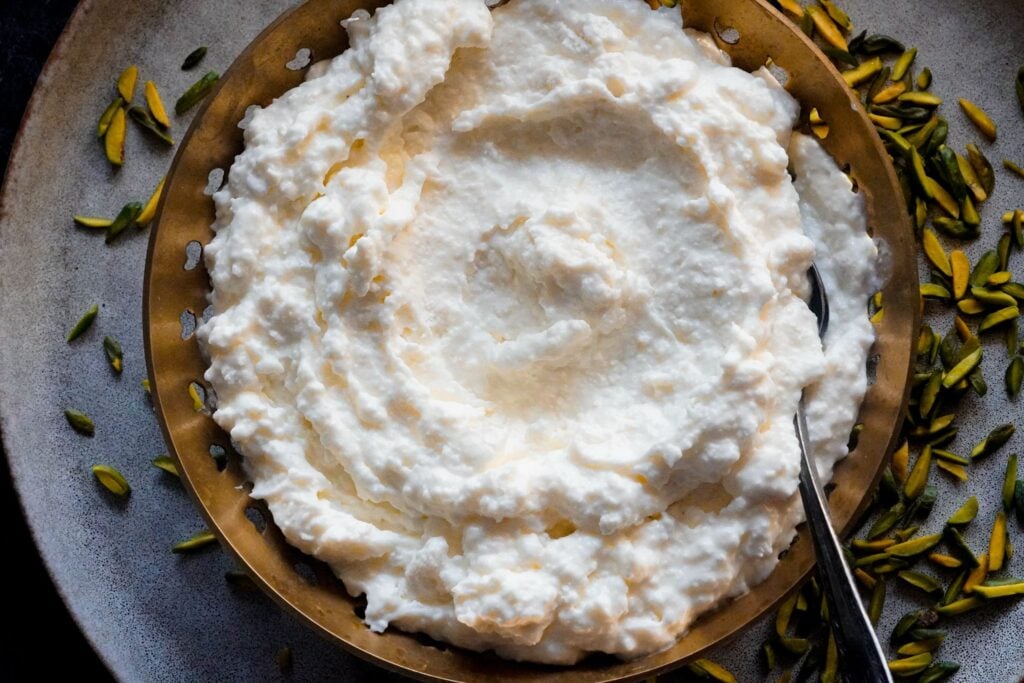
How to Make Ashta
Warm the whole milk in a pot over low heat and let it simmer gently.
Once it starts to bubble slightly around the edges, add the white vinegar and stir continuously until the milk curdles and separates into curds and whey.
Remove the curds using a slotted spoon and transfer them to a bowl. Cover and let them cool completely.
To make the cream base, whisk the heavy whipping cream, whole milk, and cornstarch in a separate saucepan without turning on the heat. Whisk together well until the cornstarch is fully dissolved and no longer clumpy.
Using a mortar and pestle, crush the mastic with a small pinch of sugar until finely ground. Make sure no large chunks remain.
Place the saucepan over medium-high heat and add the granulated sugar and crushed mastic.
Whisk continuously for about 10 minutes until the mixture thickens to a custard-like consistency.
Once thick, add in the orange blossom water, give it one final stir, and then remove from heat.
Transfer the cream mixture to a flat plate and cover with plastic wrap so it doesn’t develop a crust. Refrigerate until completely cool.
Once the cream and the cheese curds have cooled, mix them together until well combined.
Your homemade ashta is now ready to be used in pastries and layered desserts or enjoyed on its own! Keep it refrigerated until ready to serve.
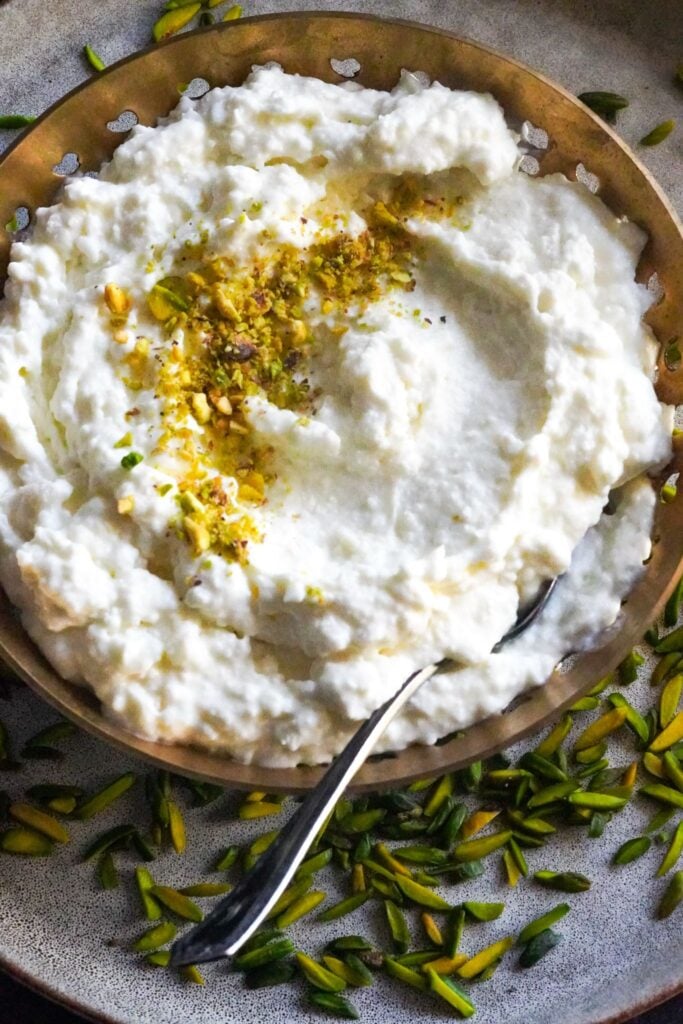
How to Serve and Use Ashta
Ashta is a versatile Middle Eastern clotted cream that adds a rich, creamy texture to countless desserts. It could be served in so many creative ways.
For a simple yet decadent treat, enjoy ashta drizzled with honey and sprinkled with crushed pistachios. You can even serve it alongside warm bread for a comforting breakfast.
It pairs beautifully with fresh fruit like strawberries, bananas, blueberries, kiwis, or mango. In the Middle East, the cocktail is served with ashta, and it’s a hit.
Whether used in pastries, spooned over desserts, or eaten on its own, ashta brings a creamy, luxurious touch to any dish!
Traditionally, it is served as a filling for aish el saraya dessert, qatayef asafiri, basbousa bil qishta, warbat, and halawat el jibn (sweet cheese rolls), adding a layer of indulgence.
The Significance of Ashta in Ramadan
During the holy month of Ramadan, desserts are a must after iftar, offering a sweet conclusion to the meal.
One of the key ingredients in many traditional treats is Ashta, a rich and creamy filling that enhances flavor and texture.
Popular Ramadan sweets like osmalieh, qatayef, znoud el sett, halawat el rozz, and warbat all feature ashta, this luscious component. Its light sweetness and velvety texture make it the perfect indulgence after a long day of fasting.

Tips and Tricks
Use Full-Fat Dairy: Whole milk and heavy cream are essential for achieving the rich, creamy texture of traditional ashta. Skimping on fat will result in a thinner consistency.
Use a Non-Stick Pan: It is recommended to use a non-stick pan to prevent the cream mixture from sticking and burning.
Keep Stirring Constantly: When cooking the cream mixture, continuous whisking prevents lumps and ensures a smooth, velvety finish.
Don’t Overheat the Milk: Simmer the milk gently when making the cheese curds; boiling it too rapidly can affect the final texture.
Chill Before Mixing: Let both the curd and cream layers cool completely before combining them to achieve the perfect consistency.
For a Smoother Ashta: Blend the mixture in a food processor for a silkier texture, but keep in mind this may make it slightly softer to work with.
Prevent a Crust from Forming: When covering your ashta, ensure the plastic wrap touches the surface to prevent a crust from forming.
Adjust Thickness with Cornstarch: For a thicker consistency, add a little more cornstarch, but don’t overdo it to keep it creamy.
Storage Tips
Refrigeration: Store ashta in an airtight container in the refrigerator for 3-4 days. Make sure to press a piece of plastic wrap directly onto the surface to prevent a skin from forming.
Freezing: While not recommended, you can freeze ashta for up to 1 month in an airtight container. Thaw it in the refrigerator overnight and whisk it well before use, as the texture may slightly change.
Frequently Asked Questions (FAQs)
Yes, some quicker versions skip the cheese curds and rely only on thickened milk and cream for a smooth texture, but using curds gives it a richer, more authentic taste.
If left uncovered, ashta forms a skin as it cools. To prevent this, press plastic wrap directly onto the surface before refrigerating.
Make sure to whisk continuously while cooking, especially after adding cornstarch, to prevent lumps and achieve a smooth consistency.
Yes! ashta can be made in advance and stored in the refrigerator for 3-4 days in an airtight container.
Recipes You Must Try:
Middle Eastern Rice Pudding (Riz Bi Haleeb)
Layali Lubnan (Lebanese Nights Dessert)
If you’ve tried this recipe, don’t forget to rate it and leave a comment below! I would love to hear about your experience. You can follow me on Facebook, Instagram, and YouTube.
Ashta, Middle Eastern Clotted Cream

Ingredients
For the Cheese:
- 4 cups whole milk
- ¼ cup white vinegar
For the Cream:
- 2 cups heavy cream
- ¾ cup whole milk
- ¼ cup granulated sugar
- 4 tablespoons cornstarch
- ½ teaspoon orange blossom water
- 2 crushed mastic rocks
Instructions
- Warm the whole milk in a pot over low heat and let it simmer gently.
- Once it starts to bubble slightly around the edges, add the white vinegar and stir continuously until the milk curdles and separates into curds and whey.
- Remove the curds using a slotted spoon and transfer them to a bowl. Cover and let them cool completely.
- To make the cream base, whisk the heavy whipping cream, whole milk, and cornstarch in a separate saucepan without turning on the heat. Whisk together well until the cornstarch is fully dissolved and no longer clumpy.
- Using a mortar and pestle, crush the mastic with a small pinch of sugar until finely ground. Make sure no large chunks remain.
- Place the saucepan over medium-high heat and add the granulated sugar and crushed mastic.
- Whisk continuously for about 10 minutes until the mixture thickens to a custard-like consistency. You want to continuously whisk so the bottom doesn't burn.
- Once thick, add in the orange blossom water, give it one final stir, and then remove from heat.
- Once the cheese curds have cooled, mix them together until well combined.
- Transfer the cream mixture to a flat plate and cover with plastic wrap so it doesn't develop a crust. Refrigerate until completely cool.
- Your homemade ashta is now ready to be used in pastries and layered desserts or enjoyed on its own! Keep it refrigerated until ready to serve.
Notes
- Use Full-Fat Dairy: Whole milk and heavy cream are essential for achieving the rich, creamy texture of traditional ashta. Skimping on fat will result in a thinner consistency.
- Use a Non-Stick Pan: It is recommended to use a non-stick pan to prevent the cream mixture from sticking and burning.
- Keep Stirring Constantly: When cooking the cream mixture, continuous whisking prevents lumps and ensures a smooth, velvety finish.
- Don’t Overheat the Milk: Simmer the milk gently when making the cheese curds; boiling it too rapidly can affect the final texture.
- Chill Before Mixing: Let both the curd and cream layers cool completely before combining them to achieve the perfect consistency.
- For a Smoother Ashta: Blend the mixture in a food processor for a silkier texture, but keep in mind this may make it slightly softer to work with.
- Prevent a Crust from Forming: When covering your ashta, ensure the plastic wrap touches the surface to prevent a crust from forming.
- Adjust Thickness with Cornstarch: For a thicker consistency, add a little more cornstarch, but don’t overdo it to keep it creamy.







3 Responses
I’ll give 5 star to all your recipe! I wish you publish a book!!! I guarantee you you will succeed!!!❤️❤️❤️
What is the use of mastic? Most of the recipes I see in Internet doesn‘t use of it.
Mastic is used plenty in levantine Arab desserts. it adds a nice hint of flavor. You can definitely omit it.